

Introduction
Indian Kitchens The kitchen has always been more than just a space for cooking in Indian homes. It is a place where flavours are crafted and memories are made—truly the heart of the household. Over centuries, Indian kitchens have transformed in purpose, design, and function. This article takes you on a journey through their evolution into the modern, modular marvels we see today.
Ancient Kitchens
In ancient India, kitchens were typically located outside the main living quarters. Fuelled by wood, charcoal, or dung, their design was simple and practical, centred around a clay stove and vessels made of brass or copper. This separation was culturally intentional, keeping smoke, heat, and odours away from the home’s interior.
Cooking was a communal affair. As women prepared food together, sharing stories and techniques, the kitchen became a vital space for bonding and preserving tradition.
Medieval Transformations
During the medieval period, kitchen design grew more complex and varied, drawing influences from different regions. The arrival of traders and travellers introduced foreign ingredients, culinary techniques, and cultural styles. Royal kitchens became particularly elaborate, featuring stone grinders, mortars, and extensive copperware. Kitchen architecture began to reflect a rich blend of indigenous and imported regional styles.
The Colonial Era
Indian Kitchens underwent a significant transformation with the advent of the colonial era. The British introduced modern amenities like refined stoves and, later, refrigerators. The concept of a designated, enclosed kitchen inside the house became more common. Western-style utensils, cutlery, and dishes began to replace traditional metalware. This period also saw the early incorporation of storage cabinets and countertops, elements that directly inspire today’s kitchen designs.
Post-Independence Modernization
After 1947, Indian Kitchens evolved rapidly alongside urbanization. The focus shifted decisively towards convenience, hygiene, and efficiency. Gas stoves replaced kerosene burners, and stainless steel emerged as the preferred material for its durability and ease of cleaning. With the rise of nuclear families, the kitchen became a more personal space, setting the stage for the modular kitchen concept. The emphasis was squarely on functionality, elegance, and ease of use.
The Contemporary Modular Kitchen
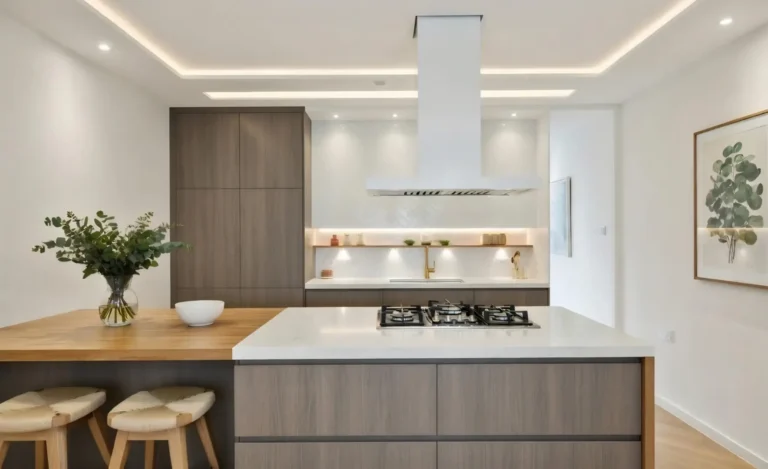
Today’s Indian Kitchens are designed to meet a wide array of needs, blending traditional essence with modern innovation. The modern modular kitchen is a fusion of smart technology, aesthetic design, and ergonomic efficiency. For examples of such contemporary designs that honour this rich evolution, you can explore the portfolio at Arena Interiors. These spaces are more than just cooking zones; they are where culture, technology, and contemporary design converge.
FAQs
1. How did traditional Indian kitchen layouts influence today’s modular designs?
Traditional Indian kitchens prioritized functionality and ventilation, often being placed separately from living areas to manage heat and smoke. Modern modular kitchens retain this focus on efficiency and hygiene but integrate smart storage, ergonomic layouts, and advanced ventilation—blending cultural practicality with contemporary innovation. Companies like Arena Interiors often draw inspiration from these traditional principles to create kitchens that are both culturally resonant and highly functional.
2. What are the key benefits of a modular kitchen over a traditional kitchen?
Modular kitchens offer customizable layouts, optimized storage, ease of maintenance, and seamless integration of appliances. They maximize space efficiency and can be tailored to individual cooking habits and family needs—a significant upgrade from the fixed, often cramped layouts of traditional kitchens.
3. Can a modular kitchen incorporate traditional Indian design elements?
Absolutely. Modern modular kitchens can beautifully blend traditional elements like vintage-style cabinet finishes, ethnic backsplashes, open shelving for brass or copper utensils, and even dedicated spaces for grinding or kneading. This fusion keeps the cultural essence alive while offering contemporary convenience.
4. What materials are best suited for Indian cooking conditions in a modular kitchen?
Given the intense, frequent cooking common in Indian households, materials need to be durable, heat-resistant, and easy to clean. Popular choices include:
Ceramic or vitrified tiles for flooring
Stainless steel for sinks and cabinets
Quartz or granite for countertops
High-pressure laminates or acrylic finishes for shutters
5. How do I choose the right layout for my modular kitchen?
The ideal layout depends on your kitchen’s size, shape, and how you use the space. Common layouts include:
Island layout: Perfect for open-plan homes where the kitchen doubles as a social hub.
Consulting with experts like Arena Interiors can help you assess your needs and design a layout that enhances both workflow and aesthetics.
L-shaped: Ideal for small to medium spaces.
U-shaped: Maximizes storage and counter space.
Parallel/Galley: Efficient for narrow kitchens.